A lot of small businesses start the same way in Central New Jersey. You want more calls from people in Princeton, stronger recognition in Trenton, or a more local presence near Atlantic City. The first move usually isn't a new office. It's a phone number that looks familiar to the people you're trying to reach.
That's where Area Code 609 matters. A local number can make your business feel closer, easier to contact, and more established in the market you're targeting. But with the 640 overlay, local dialing changes, and modern phone systems handling calls in the background, a 609 number is no longer just a label on caller ID. It's part trust signal, part routing logic, and part automation layer for things like answering questions and booking appointments.
Connecting with New Jersey Starts with Area Code 609
If you're trying to win business in Central or southeastern New Jersey, your phone number does more work than most owners realize. Before a prospect visits your website or fills out a contact form, they may see your caller ID, your Google Business profile, or your number on an ad. A 609 number immediately signals local relevance in places like Trenton, Princeton, and Atlantic City.
That matters because people answer local calls differently than unfamiliar ones. They also tend to trust a business number that looks connected to their region, especially in service businesses where speed and familiarity influence who gets the first conversation. For a law office, dental practice, home service company, or real estate team, that first call often turns into the first chance at booking appointments.
Why this isn't just about geography
Most guides stop at location. That doesn't help much when you're running a business.
In practice, a 609 number affects:
- Local credibility: Your business appears connected to the market you're serving.
- Call handling: Your phone system has to recognize that 609 and 640 now operate together in the same territory.
- Customer experience: If your setup is outdated, callers can hit dialing errors or confusing prompts.
- Workflow automation: A modern system can answer common questions, route by department, and handle booking appointments without relying on someone to sit by the phone all day.
Practical rule: If a local number brings in the call, your phone system has to finish the job. Presence without reliable routing creates frustration fast.
Businesses that get this right don't treat a local number as a vanity purchase. They treat it as part of operations. The strongest setups pair a local identity with smart routing, after-hours coverage, and tools that can confirm details, transfer callers, and capture leads when no one on staff is available.
Where is Area Code 609 Located
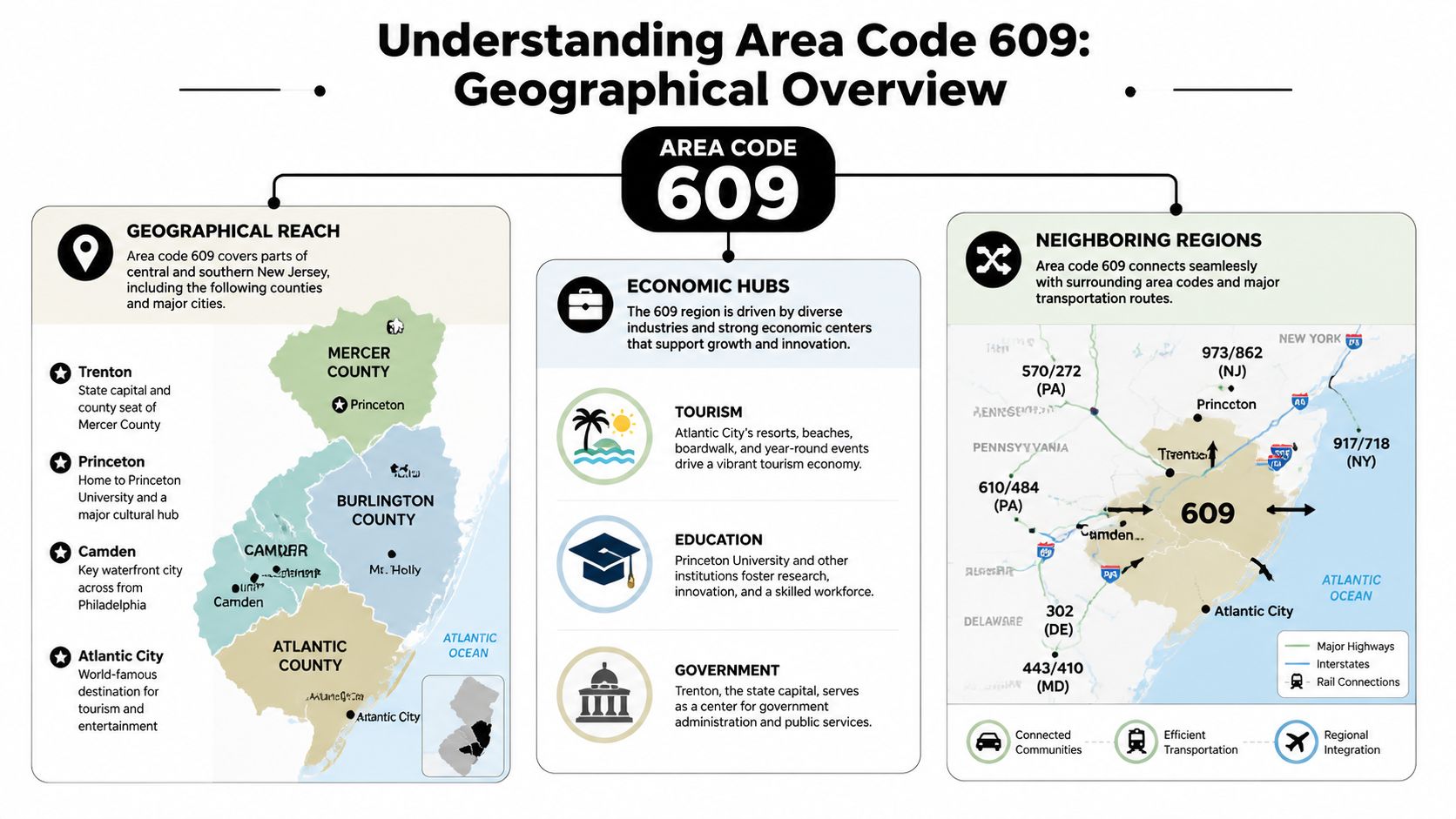
Area Code 609 covers a broad stretch of central and southeastern New Jersey. For a business owner, that matters because one number can fit very different call patterns across the same service area. A firm answering calls around Trenton, Princeton, and Atlantic City is not serving one uniform market. It is handling government and legal work in one part of the region, research and professional services in another, and tourism-driven demand closer to the shore.
The market behind the map
Trenton tends to reward local familiarity. Businesses serving agencies, law firms, healthcare groups, contractors, and other regulated or paperwork-heavy clients often benefit from a number that looks tied to the area they call home.
Princeton signals something different. Clients there often expect organized intake, prompt callbacks, and polished communication. A 609 number supports that local presence, but its true operational value comes from pairing it with call routing, voicemail-to-email, and appointment workflows that keep inquiries from sitting unanswered.
Atlantic City and nearby shore markets bring more fluctuation. Hospitality vendors, transportation services, property managers, home service companies, and event businesses often deal with spikes in call volume, weekend traffic, and seasonal demand. In that setting, a local number helps people call back, while your phone system needs to handle overflow, after-hours coverage, and fast booking appointments.
What a small business should take from that
A 609 number works best if your customers are in this part of New Jersey, or if you are actively trying to win business there. It gives callers a familiar contact point, which can lower hesitation on the first call or return call.
That does not require a physical office in every town you serve.
A virtual phone system can assign a 609 number to your business, route calls to any team member, and keep the customer experience consistent whether staff work from one office, from home, or in the field. That is the practical value of local presence. You look local to the caller, but your operations stay flexible behind the scenes.
| Business goal | Why a 609 number helps |
|---|---|
| Enter the Trenton market | Supports a local-facing identity for public-sector, legal, and regional service work |
| Build trust in Princeton | Gives prospects a familiar local contact point while your system handles follow-up and intake |
| Capture calls near Atlantic City | Helps inbound callers recognize the number as local and makes callback rates stronger for service or booking appointments |
A 609 number supports trust at the front end. The business result depends on what happens after the call hits your system.
The History of 609 and the 640 Overlay
A business owner who has worked in central or southern New Jersey for a while may remember a time when area code changes meant real operational cleanup. New signs, updated directory listings, revised print ads, and customers wondering whether the old number still worked. That history matters because the 609/640 setup was designed to avoid that kind of disruption.
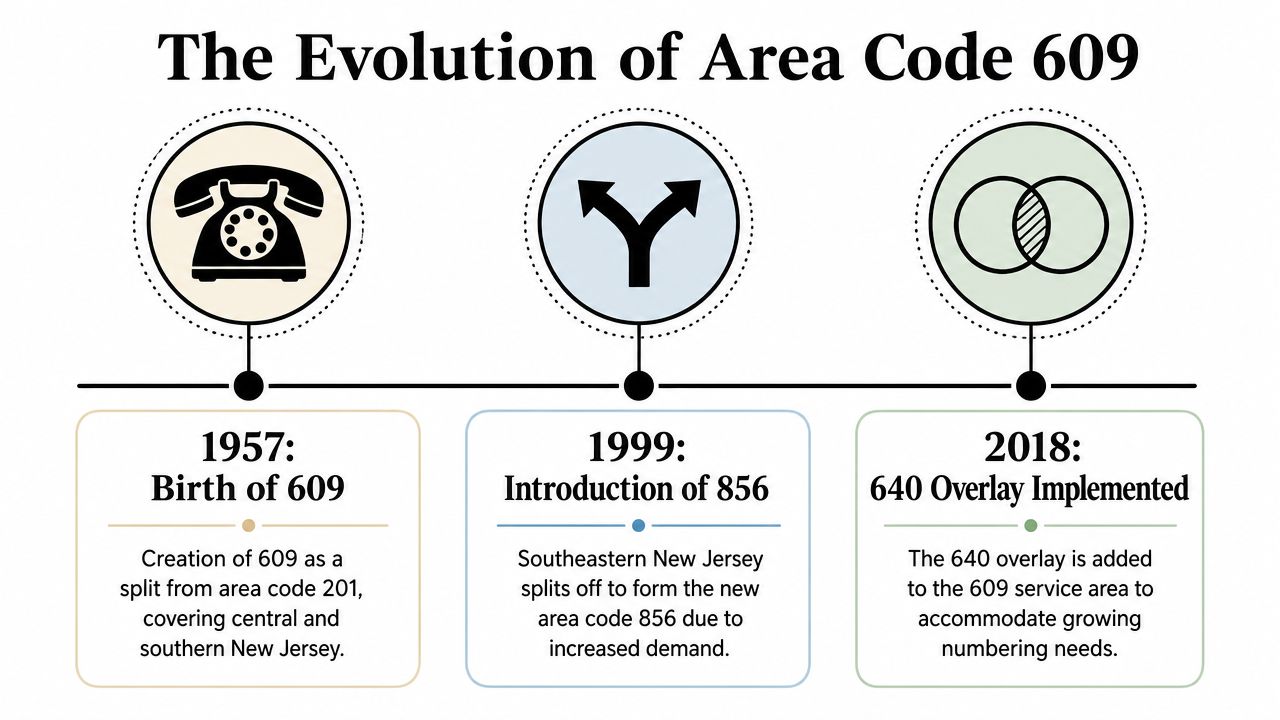
609 was introduced in 1957 as New Jersey added numbering capacity beyond 201, according to AllAreaCodes' historical summary of 609. It became one of the state's long-established local identifiers, especially for businesses serving places like Trenton, Princeton, and the Shore communities within the code's footprint.
The first big change
The original 609 territory was reduced in 1999, when part of the region moved to 856. For residents, that was an inconvenience. For businesses, it was more expensive than people often realize.
A number change affects every place your phone line appears. Storefront graphics, vehicle wraps, business cards, local listings, vendor records, customer contact databases, and call-forwarding setups all have to be updated. If even a few of those are missed, calls get lost or delayed.
That is one reason the industry moved away from repeated geographic splits when other options became available.
Why 640 was added instead of changing everyone's number
By the late 2010s, the 609 supply was running low again. Regulators responded with an overlay, adding 640 to the same geographic area instead of carving the map into another new code. WHYY's report on the 640 rollout notes that permissive dialing began on January 20, 2018, mandatory 10-digit dialing started on August 18, 2018, and new 640 numbers were scheduled to become available on September 17, 2018.
For a small business, that was the better outcome.
An overlay expands number capacity without forcing existing 609 customers to change their published number. Your company can keep the number that customers already recognize, while new lines in the same market may be assigned 640. That is a practical trade-off. The region gains more numbers, but everyone has to get used to dialing the area code for local calls.
From an operations standpoint, overlays are usually easier to live with than splits. Brand continuity stays intact. Call tracking numbers, appointment reminders, and long-standing main lines do not need a full replacement project. The adjustment shifts to system configuration instead. Businesses need phones, CRMs, dialers, and contact records set up for the full 10-digit format.
That is the lesson from the history of 609 and 640. The numbering plan changed in a way that protects local business identity, but only if your phone system is configured to handle the new dialing rules correctly.
Dialing Rules and Time Zone Explained
A customer in Princeton calls your office to book an appointment. Your ad worked, the caller is ready, and the only job left is getting the call through the right path. In the 609/640 region, that depends on one simple rule. Local calls must use all 10 digits.
That requirement comes from the overlay. Since 609 and 640 serve the same territory, seven-digit local dialing is no longer reliable for business use. Phones, CRMs, auto-dialers, forwarding rules, and click-to-call links should all store and pass numbers as area code plus local number.
Small businesses usually feel the problem in routine places, not in headline system failures. An older contact list may save local numbers without the area code. A reminder platform may push calls out in the wrong format. A front-desk employee may read from an outdated cheat sheet. Each one creates the same result. Missed connections, failed transfers, and booking friction.
Common trouble spots include:
- Stored contacts that still use seven-digit local numbers
- Outbound dialers that were never updated for 10-digit local calling
- IVR menus and forwarding paths with hard-coded local numbers
- CRM and booking integrations that do not normalize phone formats
- Voicemail greetings, printed instructions, and staff notes that tell callers to dial without the area code
Modern cloud phone systems reduce most of this risk because they standardize formatting in the background. A well-configured platform can present numbers consistently, route calls correctly, and keep automations working whether the customer has a 609 number or a 640 number. If your team is reviewing providers, this guide to VoIP phone systems for New Jersey businesses is a practical starting point.
The business implication is straightforward. Local presence only helps if the call flow works on the first try. If your system handles after-hours answering, queue routing, voicemail-to-email, or appointment scheduling, full 10-digit formatting should be the default everywhere.
Time zone matters in operations
Area code 609 is in the Eastern Time Zone. For a New Jersey business, that affects more than office hours.
Outbound sales calls, callback windows, reminder texts, and appointment confirmations should all follow Eastern Time. Teams based in another state often miss this during setup, especially when they centralize scheduling or run campaigns across multiple regions. The result is predictable. Calls go out too early, reminders arrive too late, and customers stop answering.
Set your phone system, booking software, and automated messaging tools to Eastern Time from the start. That keeps the local number and the customer experience aligned, which is what callers notice.
How Your Business Can Get and Use a 609 Number
A 609 number is most useful when you treat it as a working business asset, not just a line that rings a cell phone. The right setup should support local trust, clean routing, and tasks that directly affect revenue, especially booking appointments.
Three ways businesses usually start
Some businesses request a brand-new local number. That's common when entering a New Jersey market for the first time.
Others port an existing number because they already have brand equity attached to it. That's the better move when customers already know the line and you don't want to retrain the market.
A third group uses a virtual phone number alongside other numbers for tracking by region, team, or campaign. That setup is useful when you want separate inbound paths for ads, departments, or service lines but one shared system behind the scenes.
What to look for in the platform
The provider matters less than the operating model. You want a hosted or cloud-based system that can handle local identity and back-end automation together.
Look for these capabilities:
- Number availability and porting: You should be able to request a new number or move an existing one with minimal disruption.
- Call forwarding and ring groups: Calls shouldn't depend on a single employee being at a desk.
- Auto-attendant and IVR: Direct callers to sales, service, billing, or a booking path without making them guess.
- Shared access across devices: Staff should answer from desk phones, softphones, or mobile apps without exposing personal numbers.
- Call recording and logs: Useful for training, dispute resolution, and callback discipline.
- Appointment workflows: Many businesses gain the most from this feature. If the system can answer common questions and handle booking appointments around the clock, missed calls stop turning into missed revenue.
Local trust plus automation is the real advantage
A 609 number helps with recognition. The stronger payoff comes after the call arrives.
A home services company can route first-time callers differently from existing customers. A dental office can use voice automation to confirm office hours, collect basic intake details, and move patients into a booking appointment flow before staff even picks up. A law firm can screen urgency, capture contact details, and hand off qualified callers to the right intake path.
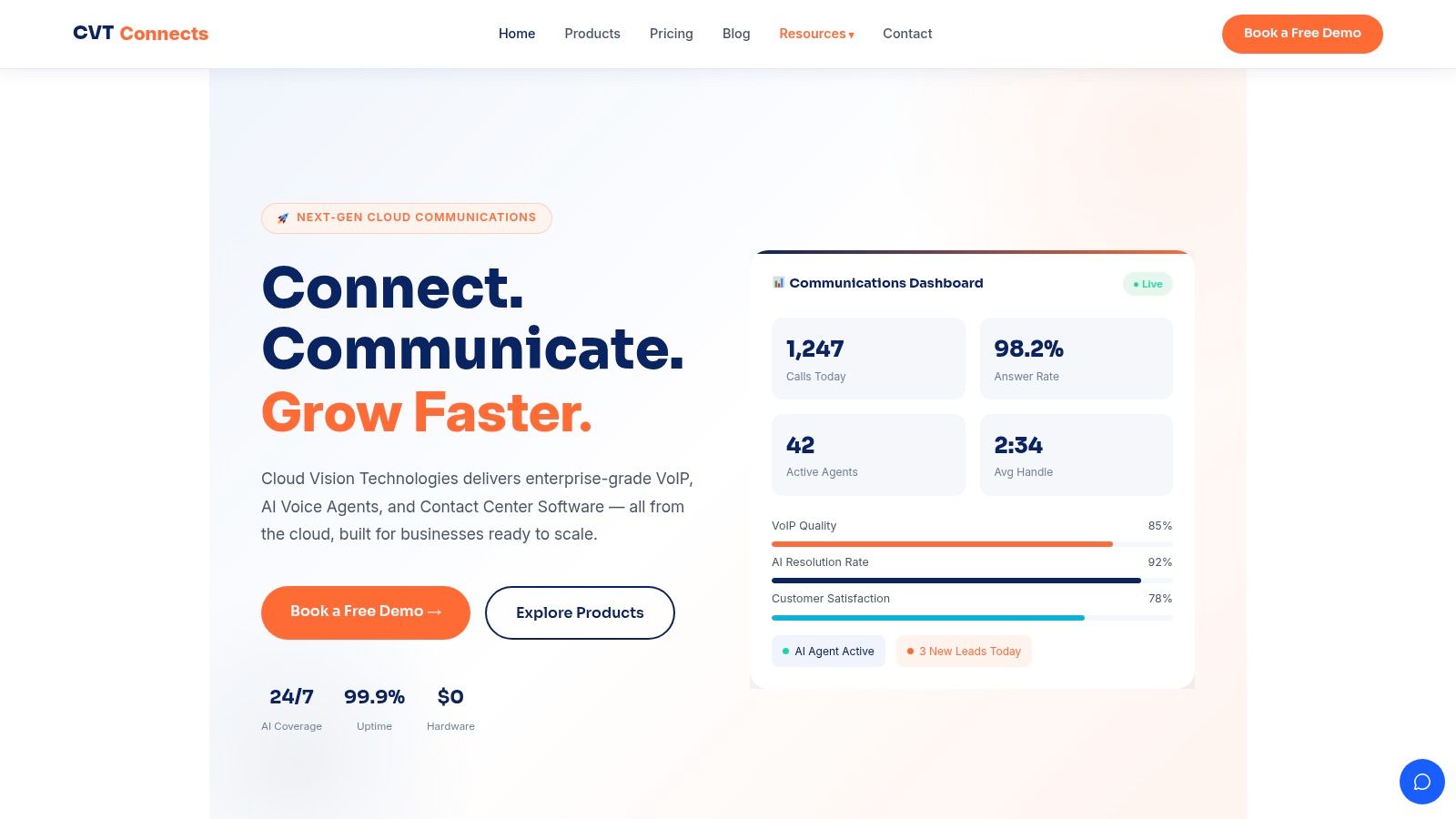
For businesses comparing options, New Jersey VoIP phone service is one route to set up a local number with cloud-based calling rather than relying on legacy hardware. Cloud Vision Technologies LLC is another provider in this category. Its platform includes hosted VoIP and an AI Voice Agent that can answer inbound calls, route them, and support booking appointments without requiring on-premise equipment.
What doesn't work well
Some setups create more problems than they solve.
- Using a personal cell as the business line: It blurs work and personal calls, and it makes handoff difficult.
- Forwarding everything to one person: That works until that person is busy, off duty, or on vacation.
- Ignoring after-hours demand: Many businesses lose strong leads because no system is available to answer simple questions or book the next step.
- Treating the number as separate from the CRM: If your staff can't see history, notes, or prior contact details, every repeat caller starts from zero.
A good 609 setup should make the number feel local while letting the operation run centrally. That's the practical standard.
Protecting Your Business from Common Phone Scams
A local number helps your business look familiar. It also means scammers may imitate that same familiarity. In the 609 region, the issue isn't unique to New Jersey. It's the broader pattern of bad actors using local-looking caller ID to improve answer rates.
One of the most common examples is neighborhood spoofing. That's when a scammer displays a number that appears to share the recipient's area code and sometimes even the same prefix. The goal is simple. Make the call look close enough to feel legitimate.
What to put in place
You don't need a massive security stack to reduce nuisance calls. You do need a business phone platform with the right controls.
- Spam filtering: Flag or block obvious junk calls before they reach staff.
- Call screening: Let the system collect caller intent before ringing a user or department.
- Custom blocking rules: Stop repeat offenders and suspicious patterns quickly.
- After-hours automation: Route unknown callers to a controlled workflow instead of a live employee's device.
- Front-desk consistency: Train staff not to trust caller ID alone, even when the number looks local.
For businesses that want inbound calls answered without exposing the team to every nuisance interaction, an AI receptionist for business calls can act as the first layer. It can greet callers, gather purpose, answer routine questions, and pass only valid conversations to staff.
A 609 caller ID tells you where a number appears to be from. It doesn't prove who is calling.
The practical balance
You don't want to block legitimate new callers. You also don't want your team spending the day dealing with spam, fake urgency, or one-ring bait calls. The right balance is screening first, routing second, and giving staff an easy way to review what happened.
That approach also helps with booking appointments. Real callers get moved into a controlled intake process. Spam gets filtered out before it distracts your office.
Your Next Steps for Connecting in Central New Jersey
A 609 number still carries real value for businesses serving Central and southeastern New Jersey. It supports local recognition in markets such as Trenton, Princeton, and Atlantic City, and it helps your business look like it belongs in the communities you're targeting.
The practical side matters just as much. Because 609 now shares territory with 640, your systems need to handle full-number dialing cleanly. Your contacts, routing rules, and automated workflows should all be built for the modern format. Once that's in place, the number becomes more than a listing. It becomes a stable entry point for customer service, lead capture, and booking appointments.
If you're evaluating your next move, think beyond getting a local number. Think about what should happen after someone calls. Should they reach the right team immediately? Should they be able to schedule service after hours? Should routine questions be answered automatically so staff can focus on higher-value work?
A useful next step is to compare what a cloud phone setup could change for your budget and workflow with a VoIP savings calculator for business phone systems.
If you're ready to turn a local number into a working communications system, Cloud Vision Technologies LLC offers hosted VoIP, AI voice automation, and call routing tools that can help businesses manage inbound calls, support after-hours coverage, and handle booking appointments more efficiently.